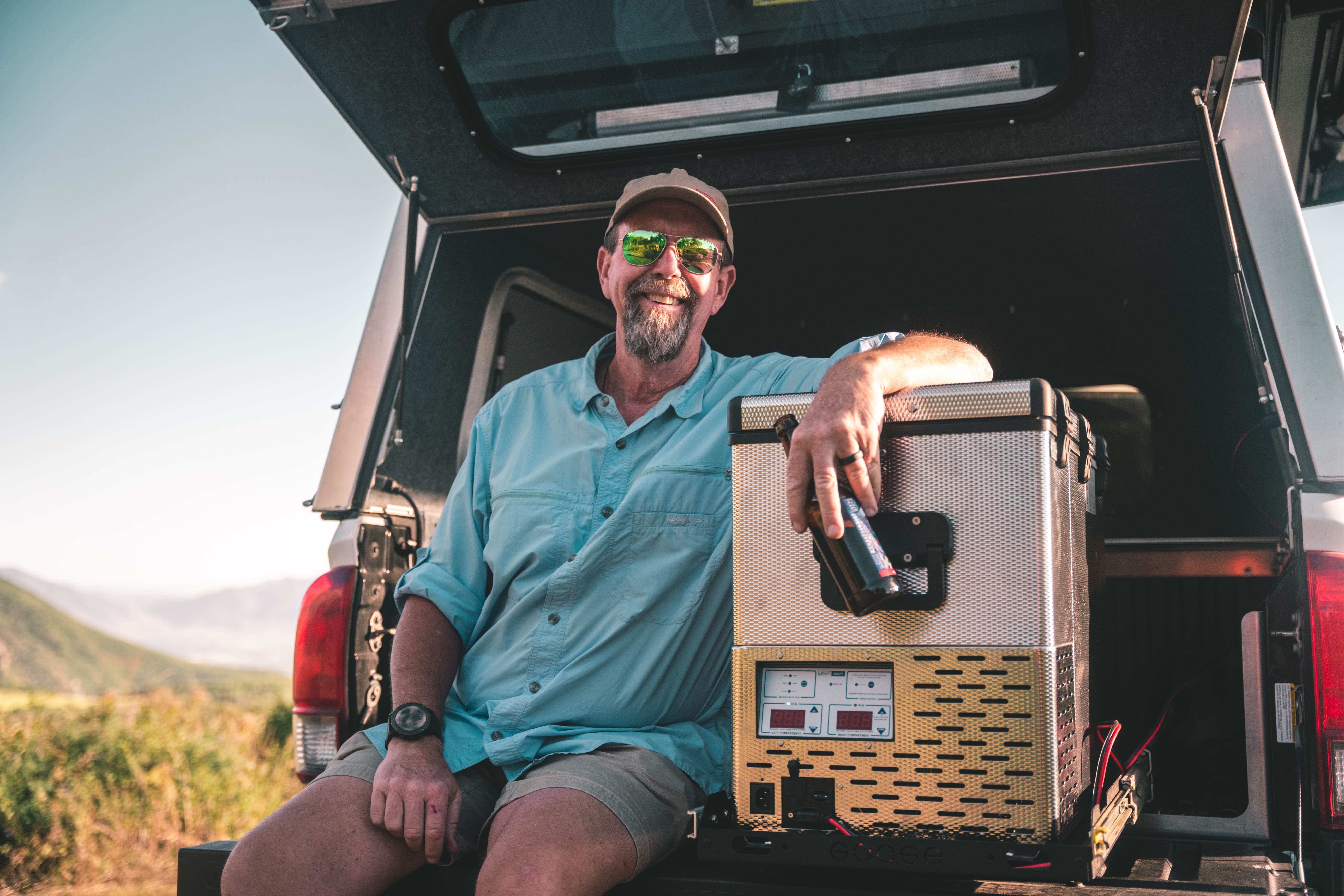
Why I Pay More for a National Luna - And Why I'd Do It Again Every Time
 Paul May
National Luna fridges were born from a WHO vaccine project in Africa, so every unit carries true medical-grade, zero-failure engineering. Their design — high-density injected insulation, full-perimeter aluminum cooling, purpose-built off-road compressor, and true dual-zone control — delivers independently verified, class-leading efficiency that protects both your food and your battery on long, solar-powered trips. Combined with National Luna’s integrated 12V ecosystem, that reliability is why we run and recommend them for serious expedition builds.
In 1990, the World Health Organization put out a challenge: design a portable refrigerator capable of transporting vaccines across remote Africa. The unit had to hold precise temperatures across thousands of kilometers of unpaved roads, in 45°C (113°F)+ ambient heat, on unreliable power. Of every company that submitted a design, only one passed every performance requirement.
That company was National Luna.
Think about what that means. The WHO doesn't grade on a curve. Vaccines that spoil mean children who don't get immunized. Failure isn't a warranty claim — it's a humanitarian crisis. So National Luna built their thermal management, their compressor engineering, and their zero-failure design philosophy around a standard that no consumer fridge manufacturer has ever had to meet.
That's the DNA in every unit they've made since. When I say "medical-grade heritage," I'm not using that phrase loosely. It's literally true — and it's the single most important thing that separates National Luna from every other brand I've evaluated.
The Efficiency Numbers Are Real — and They Matter
Overland Journal — and if you're in this space, you know it's the most respected publication for serious overlanders — did an independent head-to-head test of portable fridges. They ran National Luna against ARB, Dometic, Engel, and Truma. National Luna documented the lowest power consumption of any unit in the test.
For someone who camps in their backyard or runs a hook-up at the campground, that's a nice-to-have. For the customer I'm serving — the one running solar and a finite battery bank on a week-long expedition — it's the difference between cold food on day five and a dead battery on day two.
The efficiency comes from several things working together: up to 60mm of high-density injected foam insulation (thicker than most competitors), a stainless-steel exterior with a dimpled surface that actively reflects radiant heat, an aluminum interior that distributes cold more evenly than plastic, and a proprietary compressor that's been tuned for this exact application. These aren't features added to a spec sheet — they're the result of three decades of thermal engineering from the cold-chain world.
Dual Control Is a Genuine Engineering Differentiator
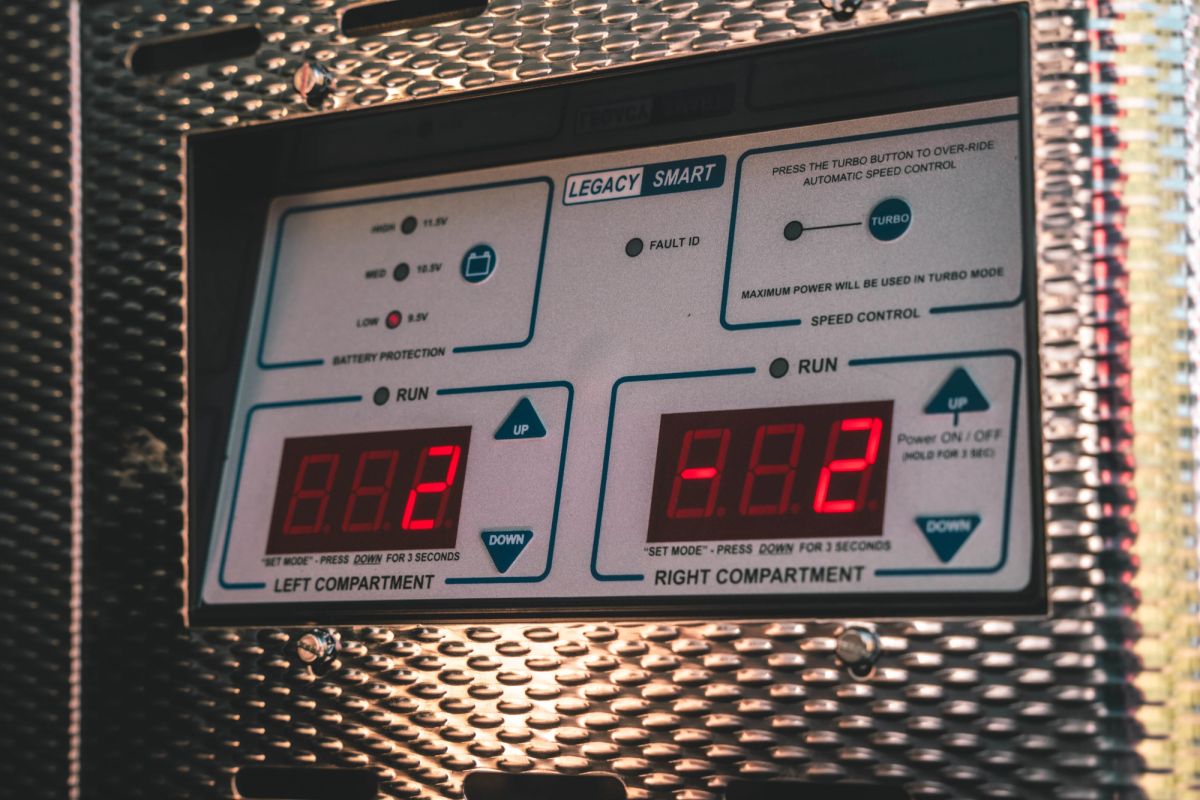
One of the most common objections I hear is: "ARB has dual zones too." They do. But there's a meaningful difference between what ARB does and what National Luna's Dual Control Technology actually delivers.
Most "dual zone" fridges create two temperature areas using a single cold plate — one end is colder, the other is slightly less cold. You don't get truly independent control. National Luna runs each zone independently from a single compressor, with its own controller and its own temperature management. You can set one side to -18°C (0°F) as a full freezer and the other to 4°C (39°F) as a fridge. Or run both as freezers. Or both as fridges. Each zone responds independently. And when you don't need both zones — say you're on a day run and only carrying drinks — you can shut one zone off entirely, which cuts power draw significantly. That kind of granular control over your energy consumption is exactly what matters when you're managing a finite battery bank off grid.
For a serious overlander carrying meat for a two-week trip alongside produce and beverages, that's not a minor feature — it's the difference between having a fridge and a freezer versus lugging two separate units. The weight and space savings alone are significant on a loaded rig.
The Off-Road Compressor Is Purpose-Built — Not Adapted
Most portable fridges are built around compressors designed for home appliances and adapted for 12V use. National Luna's Off-Road Compressor was designed from scratch for the specific demands of overlanding: continuous vibration, extreme ambient heat, voltage fluctuations, and steep operating angles.
It runs in two modes. Turbo mode pulls the fridge down to temperature quickly — useful when you're loading fresh supplies before a trip. Once it hits the set point, it shifts to Idle mode: quiet, low-draw operation that extends battery life. And it does all of this on a power range of 9.6 to 32 volts DC, meaning it works flawlessly on both 12V and 24V systems without any adaptation.
The compressor is backed by a 3-year warranty. That's a real statement of confidence in the component that matters most.
The Construction Is Just Different
Pick up a National Luna and set it next to a mid-range competitor. The difference is immediate and tactile. Stainless steel exterior. Aluminum interior. The foam isn't just thick — it's high-density injection foam, forced under pressure into the walls during manufacturing, which results in a denser, more effective insulation layer than you get with standard methods.
Here's something the spec sheets don't tell you: thicker insulation isn't the same as better insulation. What matters is R-value — the actual thermal resistance of the material. National Luna's injected foam achieves a higher R-value per millimeter than the insulation used in any other portable fridge on the market. The practical result? Their fridges warm up more slowly than the competition when the compressor cycles off. That means the compressor runs less, draws less power, and your battery lasts longer. Efficiency isn't just about the compressor — it starts with the box.
The aluminum interior matters for the same reason. Most competitors use a single cold plate on one side of the compartment — which means one cold area and one not-so-cold area, and a compressor that has to work harder to drag the whole compartment down to temperature. National Luna uses a full-perimeter, full-height aluminum cooling surface. Cold is distributed across every wall, which means the interior reaches your set temperature faster and holds it more evenly throughout. Your food at the back stays as cold as your food at the front. And because the entire interior is doing the work, the compressor gets there faster and cycles off sooner — saving energy every single time.
The stainless exterior with the dimpled surface pattern isn't just for looks either. It reflects radiant heat — significant when your fridge is sitting in a truck bed in direct sun in the desert.
This is built for the trail, not the backyard. And after years of running gear in serious conditions, I can tell the difference.
The Smart QC Features Are Actually Useful in the Field
When your fridge is installed in a drawer system, tucked under a platform, or sitting in a trailer you're towing, being able to check temperatures from your phone without opening the vehicle or the lid is genuinely useful. The NL Connect app shows live temps for both zones, lets you adjust set points, gives you battery voltage readout, and sends alerts for power issues, temperature deviations, or a lid left open. Every one of those functions has a real-world application on a multi-day trip.
The Quick-Change power system on the QC models is similarly practical. All it takes is a small flat blade screwdriver. The ability to move the control panel from the front to the side of the unit — critical when the fridge is going into a tight drawer or cargo system — takes minutes.
The Ecosystem Makes the Full Build Simpler
This is something I've come to appreciate more the longer I've worked with National Luna. They're not just a fridge company. They manufacture the full 12-volt stack: portable refrigeration, battery management systems (DC-DC chargers, dual battery kits, portable power packs), and LED camp lighting — all under one roof, all engineered to work together.
For a customer building out a serious overland rig, this matters more than it might sound. The power draw characteristics of the fridge and the charge algorithms of the battery management system are developed by the same engineering team. The lighting is designed for the same 12V architecture. When something doesn't work right, there's one brand and one support channel to call.
When you're trying to integrate components from three different manufacturers and hoping they play nice together, that simplicity has real value.
So Why Do I Carry National Luna at Equipt?
Because I wouldn't sell something I wouldn't run myself. And when I'm planning a two-week expedition — where the contents of that fridge represent my food supply, and where a dead battery on day three isn't an inconvenience but a genuine problem — I want the unit that was engineered to a standard where failure was not an option.
ARB and Dometic make good fridges. I respect them. But National Luna makes the fridge that the WHO trusted to keep vaccines alive in the African bush — and then refined it for three more decades. Lowest measured power consumption in Overland Journal's independent head-to-head test, true dual-zone independence, all-metal construction, a purpose-built off-road compressor, and a complete 12V ecosystem that eliminates the guesswork.
Medical-grade cold chain. Three decades of refinement. Purpose-built for the trail.
If you've got questions about which model fits your build, your power system, or your vehicle, reach out. That's what we're here for.